Trending


There is a moment in almost every ski trip when two jackets end up side by side on the bed: a proper ski jacket, and the padded parka you wear at home. Both look warm. Both are expensive. And at seven in the morning, with boots already on, you have to pick one. The choice matters more than most people think, because these two garments are designed for completely different jobs.
A ski jacket is a piece of moving equipment. It is built to shed wet snow, dump heat when you work hard, and stay out of the way when you turn. An insulated parka is built to keep you warm while you stand still — on a platform, at a bus stop, in a village square at dusk. Neither is better. They are simply answering different questions. Below is how to work out which question the mountain is asking you.
The clearest way to understand the difference is to think about what happens inside the jacket. On a ski run, your body generates a lot of heat — sometimes too much — and then stops abruptly when you get on a chairlift. A ski jacket is designed around that swing: it lets moisture out through the fabric or through zipped vents, and it relies on layers underneath for warmth rather than thick insulation of its own.
A parka does the opposite. It traps heat close to the body with down or synthetic fill, cuts wind, and usually covers more of the thigh. Its outer fabric is often treated to resist light rain and snow, but it is rarely fully waterproof and almost never ventilated. That is not a flaw; it is a sensible trade for walking the dog, commuting, or sitting outside a mountain restaurant with a cup of something hot.
Ski jackets use a membrane plus taped seams, and usually water-resistant zips. Snow looks dry, but sit on a wet chairlift for six minutes, fall in the powder, or ski in wet spring slush and you will find out quickly whether a jacket keeps water out. Look for fully taped seams and a fabric rating that matches your conditions — a modest rating is fine for cold dry resorts, while wet, heavy snow and mixed rain justify something more serious.
Pit zips are the single most underrated feature on a ski jacket. Groomed runs, a heavy lunch, an unexpectedly sunny afternoon — there are a dozen reasons you will be too warm by 11 a.m. Being able to open a vent without taking off your pack or your gloves changes the whole day. Parkas almost never have this.
Now be honest about the rest of the day. Most ski trips are not eight continuous hours of turning. They are two hours of skiing, an hour of standing at the lift base while someone adjusts a boot buckle, a walk through the village, a transfer, an evening outdoors. For all of that, a warm parka is simply nicer.
Parkas are warmer for their weight, especially down-filled ones, and the longer cut protects your thighs from wind — the part of you that gets cold first when you are standing still. They also look like normal clothes, which matters if you are going from the slopes to a restaurant without changing. A bulky, brightly coloured ski jacket announces that you are on holiday; a good parka just looks like you dressed for winter.
The limits are equally clear. If the snow is wet, a parka's water-resistant shell will eventually soak through, and once down fill is wet it stops insulating. Without vents you will sweat on the way down and then chill on the chairlift. And a street hood usually will not fit over a ski helmet, which is a real problem in wind or falling snow.
This is the one case where a lightly insulated parka or a hybrid jacket is genuinely fine on the slopes, especially if you ski at a moderate pace and run cold. Add a warm midlayer and you will be comfortable.
Take the ski jacket. This is exactly the weather it was engineered for, and a soaked parka becomes a heavy, cold liability by mid-afternoon.
An uninsulated shell with open vents beats everything. Pair it with a thin fleece in the morning and strip down after lunch.
A shell only. You will generate far more heat climbing than descending, and insulation becomes a wet sponge on your back. Carry a light puffy in your pack for the transition and the descent.
Parka, without hesitation. Wear it in the car, in the village, and to dinner — and leave it in the apartment on powder days.
Here is the principle that resolves most of this: you can make a shell warm with layers, but you cannot make a parka waterproof or ventilated. That asymmetry should guide your spending. A shell plus a couple of good midlayers covers a wider range of conditions than any single jacket ever will.
On a very cold day, that combination is warmer than a single thick parka because each layer can be adjusted separately. On a mild day, you leave the puffy at home and keep the shell.
Whether you buy a ski jacket or a parka, try it on with the layers you actually wear. Then run these checks:
Sizing up to fit a midlayer is normal. Sizing up so much that the jacket hangs off your shoulders is not; a loose shell flaps in wind and lets warm air escape.
If you ski more than a few days a season, own a proper ski jacket — waterproof, vented, helmet-compatible — and treat warmth as the job of your layers. Keep the insulated parka for the village, the travel day, and the evenings, where it will earn its place without ever needing to survive a wet chairlift.
If you ski once a year and already own a warm parka, do not rush out to buy a shell for a single week. Check the forecast: on a cold, dry, groomed resort a parka with a decent midlayer will get you down the hill comfortably. Just accept its limits — avoid long sittings in wet snow, don't expect it to breathe on a sunny afternoon, and consider borrowing or renting a shell if the weather turns wet.
And if you are buying one jacket to do everything, buy the shell. It is the harder garment to fake, and the one the mountain will test.
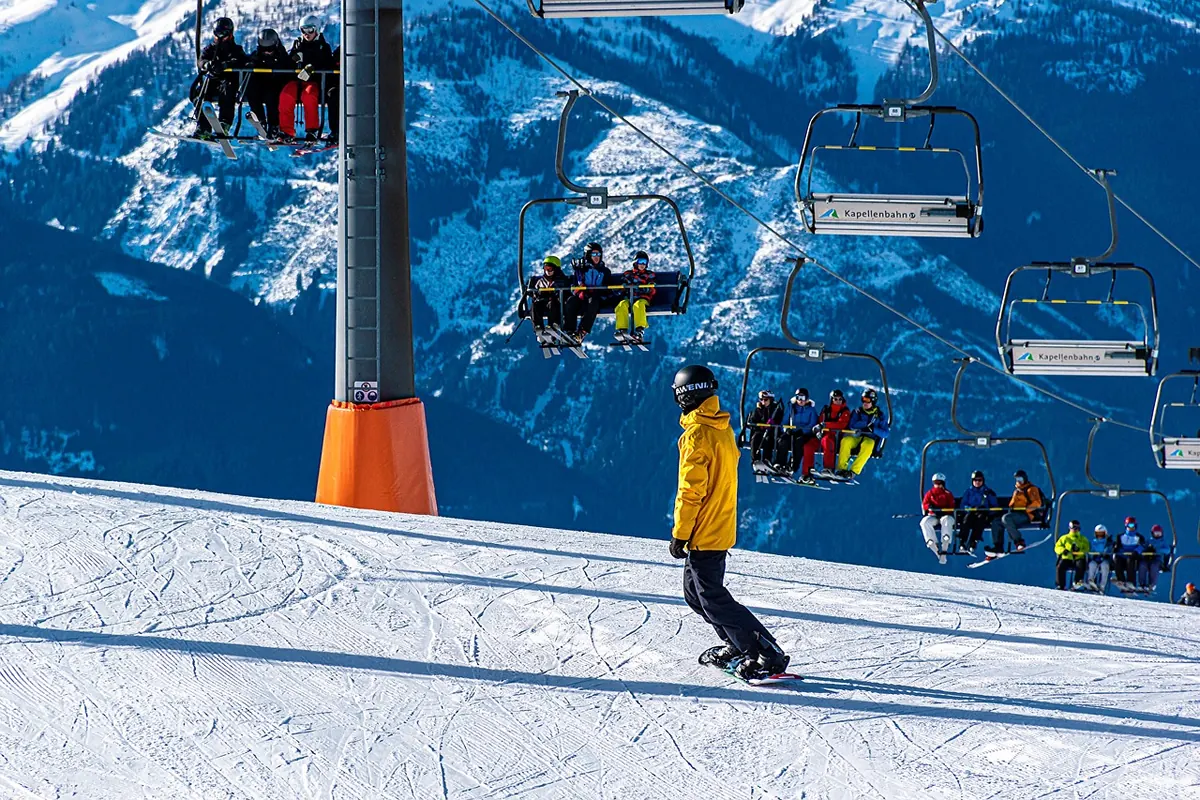
Photo: Pezibear / Pixabay