Trending

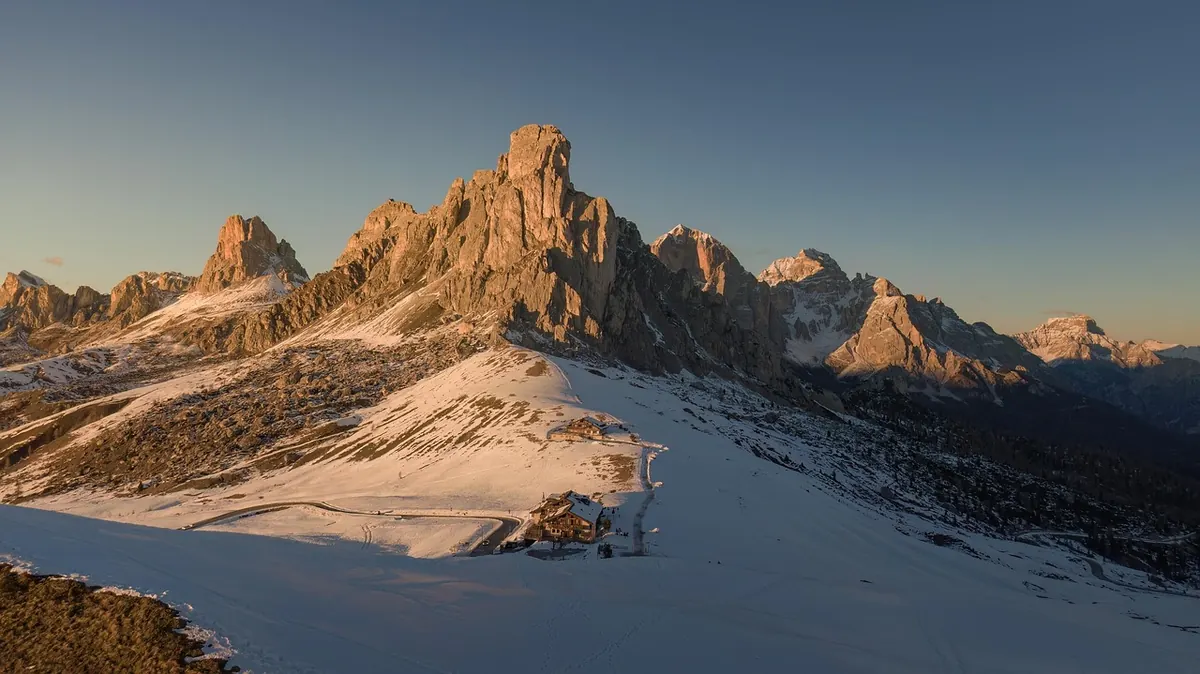
The Dolomites in winter are usually sold as a ski map: red lines, black lines, lift queues. Step away from the piste and the same valleys open in a slower register. A groomed path curling past a frozen meadow, a wooden sled rattling down a forest track, the top station of a cable car in late-afternoon light — these are the things people talk about on the drive home. None of them needs a ski pass, and most suit families, non-skiers and anyone whose knees have had enough. Here are seven ways to spend a snow day in the Dolomites without strapping on skis.
Almost every village in the range maintains some kind of winter footpath — cleared, rolled or simply well trodden — and the networks are better than most visitors expect. In Val Gardena and Val Badia, trails link village to village; in Val di Funes, easy paths run below the Odle; Dobbiaco and San Candido have flat promenades that suit a slow afternoon. Around Lake Carezza, a short circuit takes you past the water and back to the road in under an hour, which is often enough in the cold.
Two things make these walks pleasant rather than grim. First, footwear. A pair of microspikes that slip over ordinary boots turns a polished path from a balancing act into a stroll. Second, timing. South-facing paths soften by early afternoon, so start in the morning when the surface is firm, or accept wet feet and dress for it. Carry a small pack with water and a warm layer: the huts you pass may be closed between November and mid-December.
Sledding in the Dolomites is not a children's afterthought. Villages keep groomed toboggan runs — Rodelbahnen in the German-speaking valleys — and many rent proper wooden sleds at the lift station or a nearby sports shop. The pattern is simple: ride a cable car up, walk a marked path to the start, then descend a track that winds through larch and spruce for a kilometre or more.
Good places to try it include the slopes around the Alpe di Siusi, the runs above Ortisei and Santa Cristina, and several of the passes where a track follows the road. Ask at the tourist office which runs are open that week — snow cover and grooming vary a lot, even between neighbouring valleys.
Snowshoes — ciaspole — let you leave the prepared paths without disappearing into deep powder. The best routes are forest tracks and gentle alpine meadows: the Alpe di Siusi, closed to private traffic in winter, has marked snowshoe trails and one of Europe's largest high pastures as a backdrop. Val Fiscalina near Sesto leads toward the Three Peaks group. Above Tires, under the Catinaccio, paths climb through woods with the mountains appearing between the trees.
If you have never used snowshoes, book a half-day with a local mountain guide. They will teach you the rhythm, choose a route that matches the snowpack and read the avalanche bulletin with you. That last point matters: snowshoeing is easy on flat ground and serious on steep open slopes. Check the regional avalanche report before setting out, stay on marked itineraries, and turn around if the wind starts moving snow around. Rentals are widely available in winter sports shops, and many hotels keep a few pairs for guests.
Some of the best hours in the Dolomites happen at altitude with no skis on at all. In Cortina, the lifts toward Faloria and Tofana run through winter and put you above the valley with the Cristallo and the Sorapiss in front of you. From Ortisei, the Seceda cable car delivers you to a ridge that looks like a stage set; from Campitello, the Col Rodella lift faces the Sella group. At Passo Falzarego, the Lagazuoi cable car climbs to a refuge terrace with a view over the Marmolada glacier.
Check winter operating dates before you plan around a lift — many stations close for maintenance in November and again after Easter, and wind can stop a cable car for a whole afternoon. Go up early for the temperature inversion that fills the valleys with cloud, and watch the time on the last descent, because the light goes quickly in December. A warm layer, sunglasses and something to sit on make a terrace lunch far more comfortable.
Two quieter ways to move through the same landscape. Cross-country skiing has a low learning curve and an enormous payoff: the trail networks around Dobbiaco, San Candido and Anterselva are long, well tracked and gentle enough for a first attempt, and Passo Lavazè and Val di Fassa also hold reliable snow. A single lesson usually gets you gliding.
Fatbikes, with their wide tyres, work surprisingly well on packed snow, and outfitters in several valleys run guided rides on forest roads. Ride only where bikes are allowed. Pedestrian winter paths and groomed cross-country tracks are not for wheels, and in some protected areas bikes are off-limits entirely.
Not every winter day needs altitude. Outdoor rinks appear in village squares and sports grounds from Ortisei to Cortina, Canazei and Predazzo, usually with skate rental and a low-key atmosphere — a good fallback when cloud sits on the peaks. In December and the first days of January, the Christmas markets add another reason to stay low: wooden stalls, mulled drinks, the smell of smoke in the cold air. Outside that window the villages are quieter but still worth an afternoon.
Photo: Simonecappe91 / Pixabay