Trending

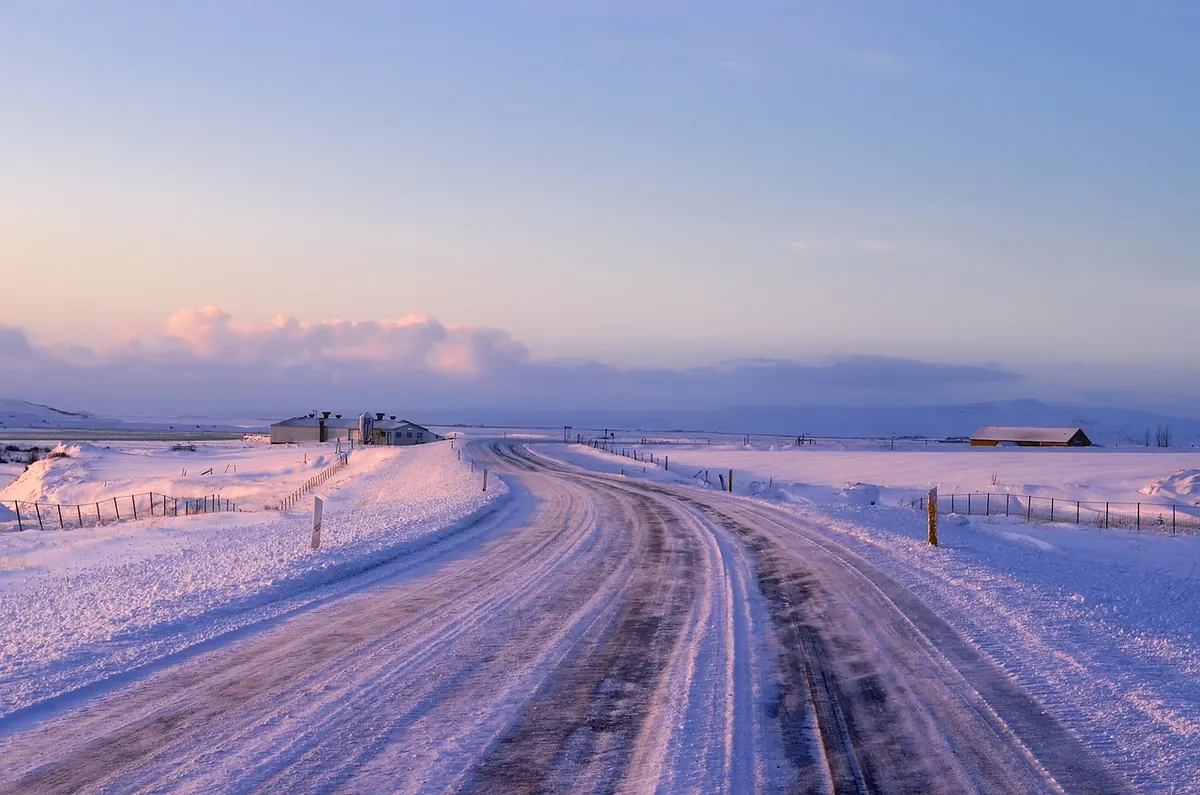
There is a particular quiet on an Alpine road in January. Snow walls above the guardrail, one set of tracks ahead of you, and the steady hum of the engine as the grade steepens. It is one of the great winter drives in Europe, and it tends to go wrong for the same handful of reasons every season. Rarely drama — more often a car on the wrong rubber, a pass closed an hour before arrival, or a car park that filled at half past eight. What follows is the sequence worth going through before you load the boot.
In winter, the interesting roads are the ones most likely to be shut. A summer route over a high col can be a perfectly ordinary drive in July and a closed gate in February, sometimes for weeks. So build the trip around corridors that stay open year-round: motorway tunnels, main valley roads, and passes that are maintained through the season rather than abandoned to the snow.
Two habits make the rest easier. First, drive in daylight. Days are short, and a mountain road at four in the afternoon in December is a different proposition from the same road at eleven. Second, resist the long single-day transfer. A seven-hour drive in summer becomes a nine-hour drive in winter with a chain stop and two slower sections, and fatigue on a descent is where small errors get expensive.
Check whether your route crosses a border — Austria, Switzerland, Italy, France, Germany and Slovenia each have their own vignettes, tolls and winter equipment rules. Confirm current requirements with the national road authority or your rental company rather than a forum thread from three winters ago.
This is the one item with no workaround. Look for the three-peak mountain snowflake symbol on the sidewall, which marks a genuine winter tire, rather than settling for M+S marking alone. Tread depth matters more than most drivers expect; a winter tire at the legal minimum behaves like a summer tire in slush.
If you are renting, ask for winter tires explicitly when you book and check them at collection. Walk around the car, look at the sidewall, and if you get all-season rubber in a mountain resort in February, say so at the desk before you leave the lot. It is far easier to solve there than on a snowy hairpin at dusk.
In Italy, winter tires or chains are typically required on many roads from mid-November to mid-April, though dates and local ordinances vary by region and altitude. Treat that as a prompt to check, not as a guarantee.
Chain signage comes in two flavours, and confusing them causes real trouble. Some signs mean chains must be fitted; others mean they must be carried. In Italy and Austria you will often see a blue round sign with a tire and chains, sometimes with a supplementary plate saying when the obligation applies. Read it, and read the local rules before you climb.
Textile snow socks are a useful backup for a short section on a front-wheel-drive car, but they are not a substitute for chains where chains are legally required.
The forecast for the nearest town — usually sitting 800 metres below you — can promise rain while the road above is under twenty centimetres of snow. Snow line is the number that matters, and it moves.
Check three things each morning: the snow line and freezing level, the wind (which drives drifting and whiteout on exposed sections), and the official status of every pass and tunnel on your route. Road authority websites and live webcams at pass height are more useful than any general forecast. Look at the camera before you commit, not after.
Then check again at the last town before the climb. Conditions change faster than your itinerary, and turning around at a village with a café is a far better outcome than turning around on a pass.
At popular lift bases, the main car park can be full by mid-morning on a weekend, and the overflow means a long walk in ski boots. Arrive early, or book a valley car park and take the shuttle. Many Italian, Austrian and Swiss resort car parks now use payment apps, so sort out the app and a card before you lose signal.
Where you leave the car matters too. Park facing out and, on a slope, facing downhill — it makes departure easier and avoids a push. Leave space around you; ploughs need room and will bury anything parked outside the marked bays. Never leave a car in an area marked for avalanche control, snow clearing or emergency access, and never in a spot that blocks a hairpin.
Clear the roof properly before you drive. Snow that slides forward onto the windscreen mid-corner is a genuine hazard, and in several Alpine countries an uncleared roof is an offence in itself.
Most winter driving kits are built around the wrong scenario. The realistic one is a two-hour wait behind a closed pass or a car that will not start at minus twelve. Pack accordingly:
Top up the fuel before the climb rather than after. A quarter tank in a valley is fine; the same quarter tank while idling for warmth at altitude is not.
Ten minutes before departure, run the same short loop: check the road status for every pass and tunnel on today's route, look at the webcam at the top, check the snow line, clear all glass, lights and the roof, and confirm tire pressure and washer fluid. Charge the phone. Tell someone where you are going and roughly when you expect to arrive.
Then allow more time than the map suggests, drive the descents a gear lower than feels necessary, and accept the closed pass as information rather than an obstacle. The best Alpine winter drive is usually the one with a little less ambition and a little more margin.
Photo: 12019 / Pixabay